 Skip to content
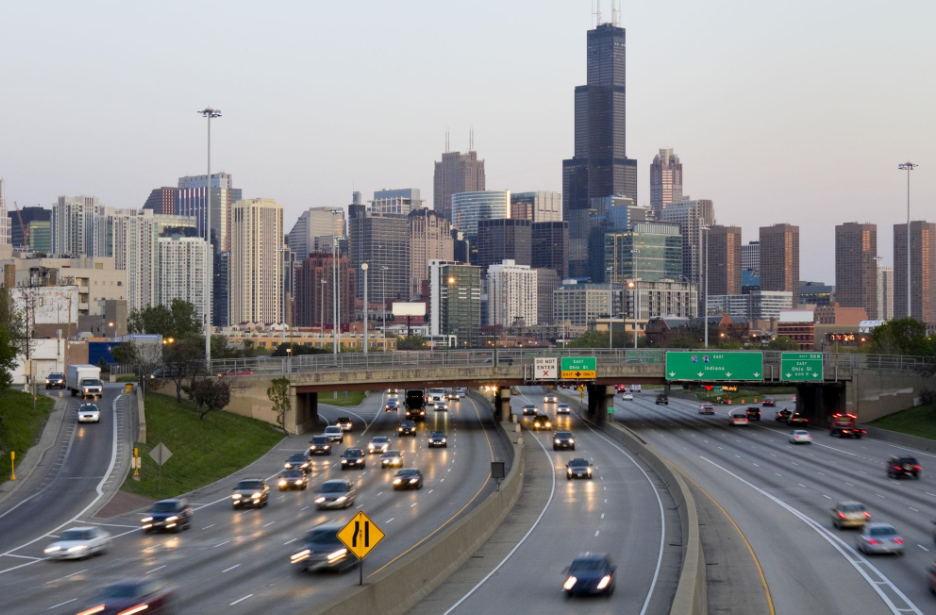
If you’re heading to O’Hare Airport, the “best route” isn’t fixed—it varies by time of day. The same route that takes 30 minutes in the morning can take over an hour later.
In most cases, your route will involve one of these main corridors:
- I-90 Kennedy Expressway (Kennedy Expressway)
- I-294 Tri-State Tollway (Tri-State Tollway)
- I-290 Eisenhower Expressway (Eisenhower Expressway)
The key is knowing when each one works—and when it doesn’t.


Early Morning (4:30 AM – 7:00 AM): Fastest and Most Predictable
Early morning is the easiest time to get to O’Hare. Traffic is light, and most routes are open.
Best route:
- I-90 (Kennedy Expressway) directly toward O’Hare
Real travel time:
- Downtown Chicago → O’Hare: 25–35 minutes
- North suburbs → O’Hare: 20–30 minutes
- West suburbs (via I-294): 30–40 minutes
At this time, the Kennedy Expressway flows smoothly. You don’t need to overthink it—this is when the most direct route is usually the best.
The only thing to watch for is construction zones, which are common overnight.
Morning Rush Hour (7:00 AM – 10:00 AM): The Most Misleading Window
This is where most people underestimate travel time.
What actually happens:
- Inbound traffic to downtown is heavy
- Outbound toward O’Hare can still slow down, especially near merges
- The Kennedy Expressway becomes unpredictable
Best routes:
Option 1 (from downtown):
- Start on I-90 Kennedy, but monitor traffic closely
- If congestion builds → switch to local roads (Milwaukee Ave) for short stretches
Option 2 (from suburbs):
- Use I-294 Tri-State Tollway to bypass city congestion
Real travel time:
- Downtown → O’Hare: 45–75 minutes
- North suburbs: 30–50 minutes
- West suburbs: 35–60 minutes
This is the time when navigation apps often underestimate delays. A route that says 40 minutes can easily stretch past an hour.
Midday (10:00 AM – 3:00 PM): Stable but Not Empty
Midday is more predictable, but traffic doesn’t disappear.
Best route:
- I-90 Kennedy Expressway (primary)
- Use I-294 if coming from west/south suburbs
Real travel time:
- Downtown → O’Hare: 35–50 minutes
- Suburbs → O’Hare: 30–45 minutes
This is a good window for travel, but small slowdowns still happen near O’Hare exits.
The key difference from morning rush hour is consistency—you’re less likely to hit extreme delays.


This is the hardest time to get to O’Hare on schedule.
What actually happens:
- Outbound traffic toward O’Hare increases
- Bottlenecks form on I-90
- Delays spread quickly across multiple routes
Best routes:
Avoid relying only on I-90.
Instead:
- Use I-294 Tri-State Tollway when possible
- Combine highways with arterial roads like Mannheim Rd or Irving Park Rd
Real travel time:
- Downtown → O’Hare: 60–90+ minutes
- North suburbs: 40–70 minutes
- West suburbs: 45–75 minutes
This is where route flexibility matters. Sticking to one route without checking traffic can cost you a lot of time.
Late Evening (7:00 PM – 11:00 PM): Gradual Improvement
Traffic starts to ease, but doesn’t disappear immediately.
Best route:
- Return to I-90 Kennedy Expressway as the primary
- Use alternates only if needed
Real travel time:
- Downtown → O’Hare: 30–45 minutes
- Suburbs: 25–40 minutes
By around 9 PM, conditions improve significantly.
Late Night (11:00 PM – 4:00 AM): Fast but Watch Construction
Late night travel is usually fast—but comes with a different risk.
Best route:
- I-90 Kennedy Expressway
Real travel time:
- Downtown → O’Hare: 20–30 minutes
Important note:
Nighttime construction is common in Chicago. Lanes may be closed, and routes can shift.
Always check before leaving.
Route Strategy Based on Where You’re Coming From
This is where things get more practical.
From Downtown Chicago:
- Primary: I-90 Kennedy Expressway
- Backup: Milwaukee Ave (partial bypass)
From North Chicago (Evanston, Skokie):
- Use I-94 → I-90 merge carefully
- Or take local routes if congestion builds
From West Suburbs (Naperville, Oak Brook):
- Best option: I-294 Tri-State Tollway → O’Hare exits
From Northwest Suburbs (Schaumburg):
- Shortest routes often involve local roads + I-90 access points
What Most People Get Wrong About Routes
The biggest mistake is assuming:
“Shortest route = fastest route”
In Chicago, that’s often not true.
The fastest route is the one with:
- the least congestion
- fewer bottlenecks
- predictable flow
That’s why longer routes like I-294 can sometimes be faster than direct ones.
How to Choose the Best Route in Real Time
Even with all this information, conditions can change quickly.
Before leaving, always:
- Check live traffic (Google Maps or Waze)
- Look for red zones or slowdowns
- Identify at least one backup route
Small adjustments—like switching highways or exiting earlier—can save 15–30 minutes.
Final Takeaway
There is no single “best route” to O’Hare. The best route depends on time of day, traffic patterns, and your starting location.
If you understand how each route behaves throughout the day, you can make smarter decisions and avoid unnecessary delays.
The goal isn’t just to find a route—it’s to choose one that gives you the highest chance of arriving on time.
